Kids' Shoe Size Guide: Find The Right Fit

Kids Shoe Size Charts
Infant & Baby Shoe Size Chart (0-12 Months Old)
Approximate Ages
| UK | EU | Foot Length (cm)
| Foot Length (in)
|
3-6 months
| 0.05 | 16 | 8.9 | 3.5" |
6-9 months
| 1 | 17 | 9.5 | 3.75" |
9-12 months
| 2 | 18 | 10.5 | 4.125" |
Toddler Shoe Size Chart (1-4 Years Old)
Approximate Ages
| UK | EU | Foot Length (cm)
| Foot Length (in)
|
18-24 months
| 3.5 | 20 | 11.8 | 4.63" |
18-24 months
| 4 | 20 | 12 | 4.75" |
2 yrs
| 4.5 | 21 | 12.7 | 5" |
2 yrs
| 5.5 | 22 | 13 | 5.125" |
2.5 yrs
| 5.5 | 22 | 13.3 | 5.25" |
2.5 yrs
| 6 | 23 | 14 | 5.5" |
2.5 yrs
| 6.5 | 23 | 14.3 | 5.625" |
3 yrs
| 7 | 24 | 14.6 | 5.75" |
3 yrs
| 7.5 | 25 | 15.2 | 6" |
3.5 yrs
| 8 | 25 | 15.6 | 6.125" |
3.5 yrs
| 8.5 | 26 | 15.9 | 6.25" |
4 yrs
| 9 | 27 | 16.6 | 6.5" |
Little Kids Shoe Size Chart (4-8 Years Old)
UK | EU | Foot Length (cm)
| Foot Length (in)
|
9.5
| 27 | 16.8 | 6.625" |
10
| 28 | 17.1 | 6.75" |
10.5
| 29 | 17.8 | 7" |
11
| 30 | 18 | 7.125" |
11.5
| 30 | 18.4 | 7.25" |
12
| 31 | 19 | 7.5" |
12.5
| 31 | 19.4 | 7.625" |
13
| 32 | 19.7 | 7.75" |
14
| 33 | 20.3 | 8" |
1
| 33 | 20.6 | 8.125" |
1.5
| 34 | 21 | 8.25" |
2
| 34 | 21.6 | 8.5" |
Big Kids’ Shoe Size Chart (8 - 12 Years Old)
UK | EU | Foot Length (cm)
| Foot Length (in)
|
2.5
| 35 | 21.9 | 8.625” |
3
| 36 | 22.2 | 8.75” |
3.5
| 36 | 22.9 | 9” |
4
| 37 | 23.2 | 9.125” |
4.5
| 37 | 23.5 | 9.25” |
5
| 38 | 24.1 | 9.5” |
5.5
| 38 | 24.4 | 9.625” |
6
| 39 | 24.8 | 9.75” |
Foot Locker Kids Shoe Size FAQs
How can you find the right shoe size for kids? Kids’ feet grow quickly, which can make it tricky to find the right size. To help you get the right fit, first time, we've created this simple guide. It includes a kids’ shoe size chart and a step-by-step foot measurement tutorial. From a baby shoe size chart by age to older children’s shoe size chart, we’ve got you, and your kids, covered.
How Do Kids Shoe Sizes Work?
First, check the length of the foot from heel to the longest toe; after measuring this, match it to the size chart. There are different systems for the size chart: EU and UK. Either should help you find the perfect pair for your kids. Sizes start from small infant sizes through toddler to bigger children's sizes - with an overlap where a toddler size 14 is followed by a big kids’ size 1. This is only because the scale changes.
What Are Baby Shoe Sizes by Age?
Baby shoe sizes typically start from 0.05 and go up to 3. A UK size 0.05 corresponds to 3 – 6 months old, and a UK size 1 corresponds to 6 – 9 months old. Growth is individual so it’s best to measure foot size as accurately as you can.
· 3-6 months: UK size 0.05
· 6-9 months: UK size 1
· 9-12 months: UK size 2
What Are Toddler Shoe Sizes?
After 9 months, your kids are in toddler territory. UK toddler shoe sizes start around 3 to about size 9 for toddlers. EU 20 or UK 3.5 - 4 works well for 18 – 24 months. At the end of this age group, UK 7.5 – 9 is a great fit (EU size 25-27).
What Are Kids Shoes Sizes by Age?
Kids’ shoe sizes by age follow broad ranges. The safest way is always to measure the foot and check the chart. Baby shoe sizes start from 3 months (UK size 0.05) to 12 months (UK size 2), and kids’ sizes start from 4.5 years (UK size 9.5) to 12 years (UK size 6).
How Do UK to EU Children’s Shoe Sizes Work?
The UK to EU children’s shoe size chart follows the same principles as adults’ shoe sizes. The EU size is usually about 33 numbers higher than the UK size. For example, UK size 3 is roughly an EU size 36, and a UK size 5 is roughly an EU size 38.
How To Measure Kids’ Feet at Home?
We have a step-by-step guide that will help you find the most comfortable fit the first time (without having to return for a new size).
1. Prepare the Paper
Print a blank sheet of paper and place it on a flat surface. Then, have your child stand in socks. Make sure their weight is evenly distributed on both feet.
2. Trace Each Foot
Print a blank sheet of paper and place it on a flat surface. Then, have your child stand in socks. Make sure their weight is evenly distributed on both feet.
3. Measure Length
Mark the tip of the longest toe and at the end of the heel. Now use a ruler to measure toe-to-heel and record the results in centimeters.
4. Measure Foot Width
This one is easy. Measure across the widest part of each foot.
5. Measure While Wearing Socks
Make sure your kids are wearing socks while you measure them if they wear socks with their shoes. This will help you be more accurate.
We’re going even further to make sure you get this as right as possible. Check out our printable guide. First, you should print at a 100% scale. Make sure “fit to page” is turned off. Print the guide. Next, place the paper on a hard surface. Have your children stand in socks on the page to find your child’s perfect size. Finally, mark the spot with the right measurements (don’t forget to add 1.4cm for comfort and growth), and now you’re good to shop.

What Should You Keep in Mind When Measuring Kids’ Feet?
Kids often have one longer foot so you always have to use the larger measurement when picking out shoes. A good rule of thumb is to always add 0.8-1.2 cm to the measured length to allow for growing room and comfort. And if they’re growing quickly, you can go for a 1.4 cm increase.
Are Shoe Sizes the Same for Girls and Boys?
Between the ages of 0 and 7, girls’ and boys’ shoe sizes tend to be the same. Foot size is determined by both width and length. As children grow older—typically from 8 to 13 years—differences start to appear. The main distinction between girls’ and boys’ shoes is the width: boys’ shoes are designed to be wider with greater foot volume, while girls’ shoes have narrower widths through the heel and midfoot. Another difference lies in the footbed: boys’ shoes generally have flatter versions, whereas girls’ shoes are often designed with a slightly higher arch.
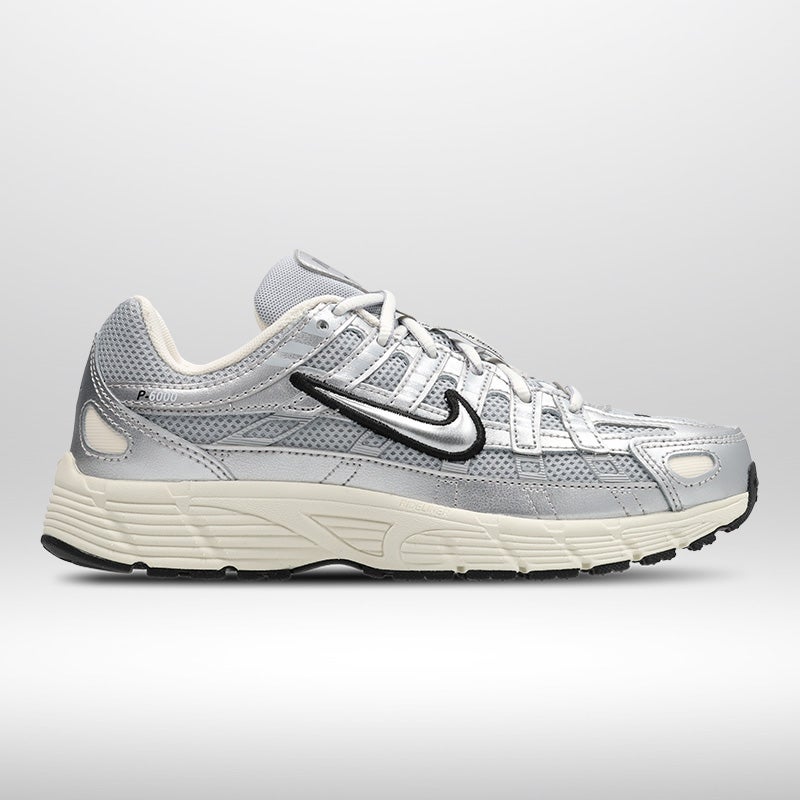
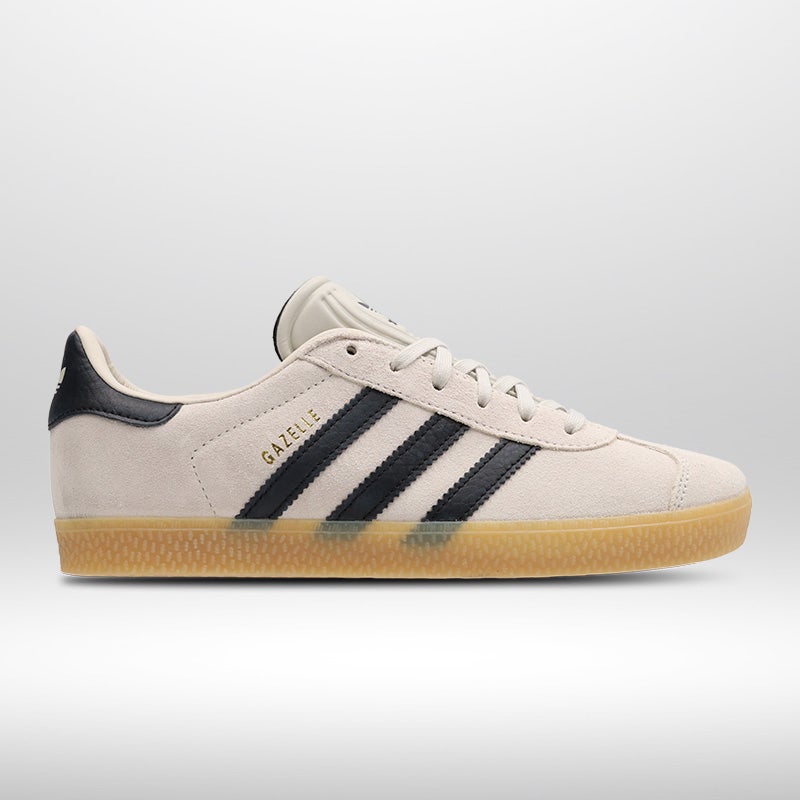
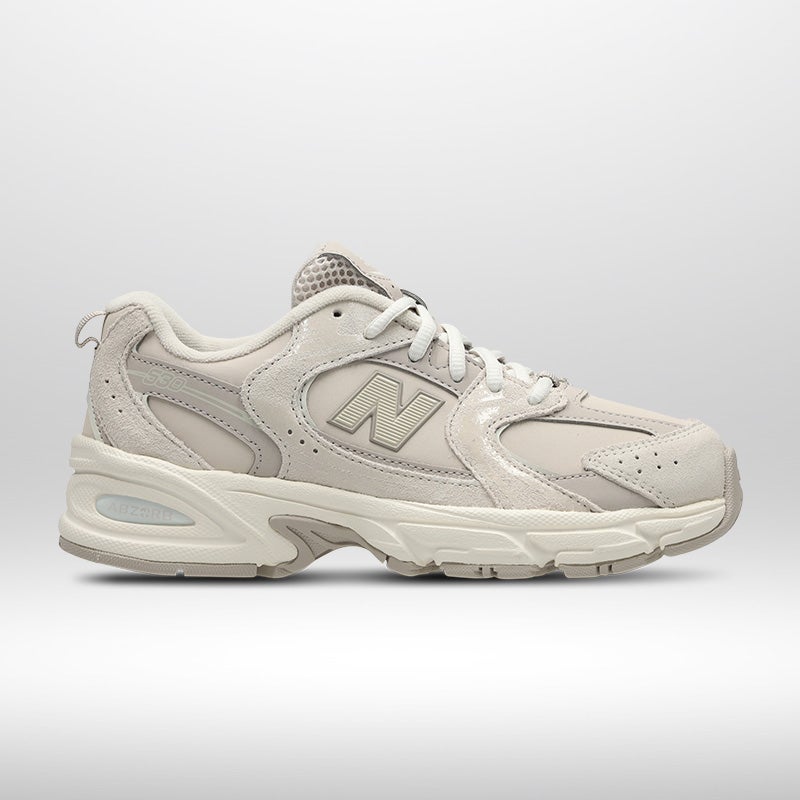
Finding the right shoe size for kids is essential for comfort and healthy development. With our guide, including kids shoe size chart and conversion information, you’ll find the perfect fit every time. Browse through our selection of Nike, adidas and New Balance sneakers and find the perfect fit for your kids.